Why cats nibble at flowers
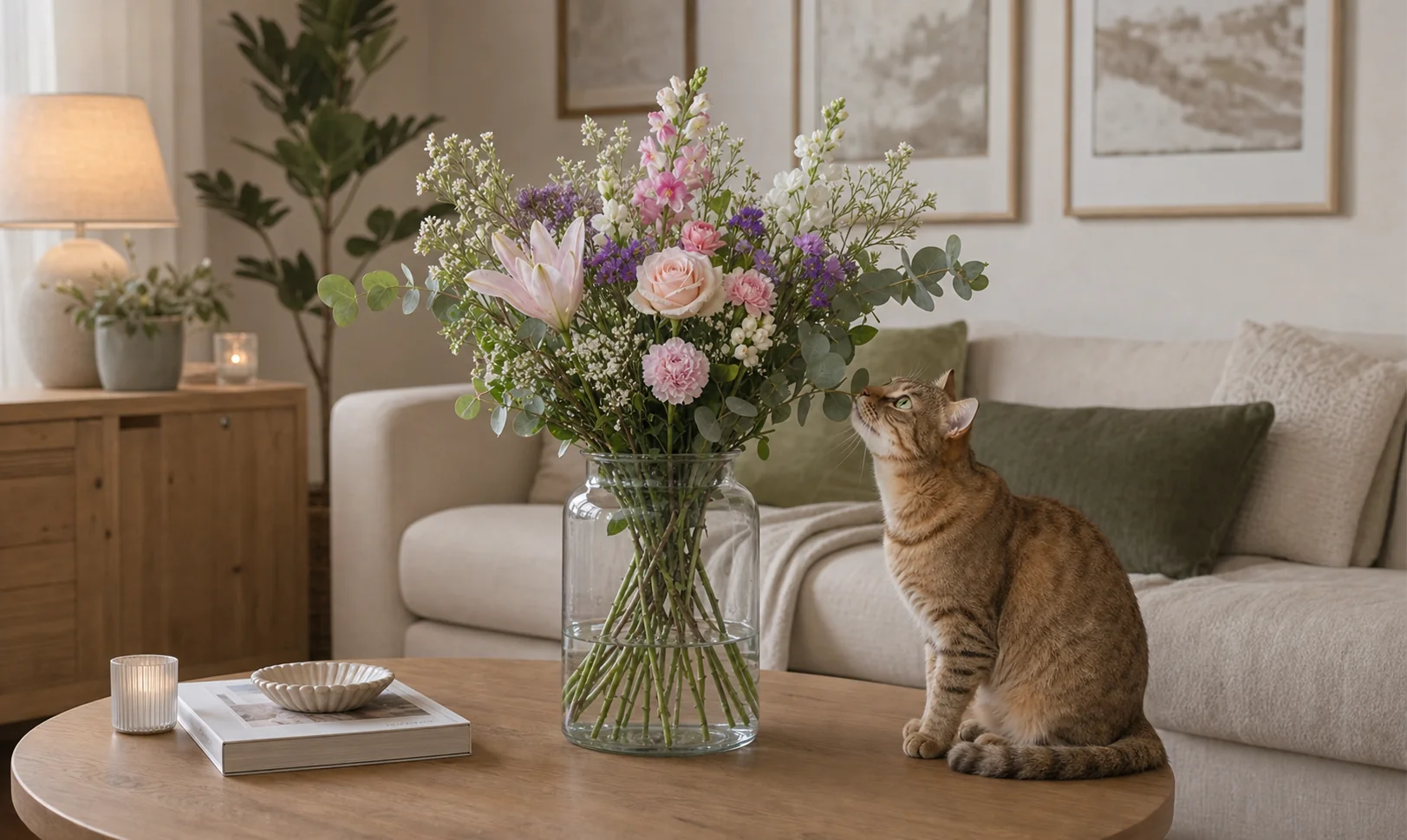
Cats don't do it to annoy us. The reasons are often quite simple. They are curious. A new bouquet smells interesting, moves easily and suddenly appears in the room.
Some cats also like to chew plants because they want to take in plant fibres. That is why cat grass can help. If your cat has a safe plant of its own, the bouquet sometimes becomes less exciting. Even so, you shouldn't rely on it. Some cats go for anything new regardless.
These flowers are particularly dangerous for cats
Lilies
Very dangerous
All parts of the plant are toxic, including pollen and vase water. Even small amounts can be life-threatening. They don't belong in a home with cats at all, not even out of reach.
Lily of the valley
Highly toxic
They look small and harmless, but can cause serious poisoning. They don't belong in a home with cats.
Tulips
Problematic
The bulb is especially critical, but you shouldn't regard other parts of the plant as harmless either. Cut flowers usually come without the bulb, but it is still better to keep them out of reach.
Hyacinths
Beware of the bulb
Not a good choice for homes with cats. Extra caution makes sense, especially with the bulb.
Narcissi / daffodils
Toxic
Narcissi are toxic to cats and shouldn't be within reach. The same goes for daffodils, which belong to the same plant family.
Calla lily
Irritates mucous membranes
Looks elegant, but isn't ideal for cats. It can irritate mucous membranes and is better kept out of a home with cats.
Chrysanthemums
Can cause symptoms
Can cause symptoms in cats. Not a good choice if your cat likes to go for plants.
Hydrangeas
Better avoided
I would avoid these around cats too, or at least place them safely out of reach.
Oleander
Very toxic
Oleander is very toxic and should never be within reach of pets. That applies not only to cats, but also to dogs and other animals.
Flowers considered more cat-friendly
The wording matters here. I wouldn't claim that these flowers are completely safe. It is better to say: these flowers are considered much less of a problem, or non-toxic. Even non-toxic plants can cause vomiting or diarrhoea in cats if larger amounts are eaten. So flowers should still not be treated as something to nibble on.
Roses
A better option
Considered one of the better options for households with cats. The thorns matter, though. They can prick paws or mouths, so it is best to remove them.
Gerbera
Colourful and unproblematic
A good choice if you want to put together a more cat-friendly bouquet. Popular, colourful and considered less of a problem.
Sunflowers
Choose a stable vase
Also considered a good option for homes with cats. Just make sure the vase stands firmly, because the large flower heads can quickly become interesting to cats.
Freesias
Delicate and fragrant
Another possibility for households with cats. They smell lovely, look delicate and work well in mixed bouquets.
Snapdragons
Colour without the risk
Also considered more cat-friendly, they bring colour to the bouquet and are a good alternative to more problematic varieties.
Statice (sea lavender)
Popular filler flower
Often used as a filler flower and considered a good option for more pet-friendly bouquets.
With posyco you can tell us about pets at home
When you order a bouquet from posyco, you can say whether it should be suitable for a household with pets. This is especially helpful if cats or dogs live at home and you aren't sure which flowers could be a problem.
Our partner florists can then put the bouquet together so that particularly critical flowers are avoided. This is not an absolute safety guarantee, but it helps to keep the obvious risks in mind right when the bouquet is tied. With cats this matters especially, because some flowers aren't just a little hard to tolerate, they can be truly dangerous.
If you would like to order a bouquet right away, you can create your own bouquet here and state during the order that pets live in your household.
What to do if your cat has eaten flowers
If you know or suspect that your cat has nibbled a dangerous flower, don't wait and see. This applies especially to lilies.
Secure the flower or plant part
Take a photo of the plant
Call a vet practice, an animal hospital or the emergency vet service straight away
Don't give any home remedies
Don't try to make your cat vomit
If possible, have the plant name or packaging ready
The Deutscher Tierschutzbund recommends seeking veterinary help immediately if you suspect poisoning. If an animal's life is in danger, it should be taken without delay to the nearest small animal vet or an animal hospital.
In Germany there is no central poison hotline purely for animals. The poison information centres are mainly responsible for people. In some cases, though, they can give a first assessment for animal poisonings too. Your most important point of contact is still always a vet practice or animal hospital.
Emergency vet service in Germany
If it happens outside normal opening hours, you should look for the emergency vet service in your region. Search terms could be, for example:
Tierärztlicher Notdienst plus your town or city
Tierklinik Notdienst plus your town or city
Tierarzt Notdienst Katze plus your town or city
In genuine emergencies such as poisoning, you shouldn't wait until the next day. It is also worth knowing that the emergency service can cost more than a normal vet visit. But that should never be the reason to wait in a possible case of poisoning.
What to look out for when buying flowers
If you are buying flowers and have a cat at home, it is best to ask straight away for a more cat-friendly bouquet.
Good options
Roses, gerbera, sunflowers, freesias, snapdragons, statice (sea lavender)
Better avoided
Lilies, lily of the valley, narcissi, hyacinths, tulips, chrysanthemums, calla lilies, hydrangeas, oleander
And honestly: I really wouldn't make an exception for lilies. If you want to give a bouquet as a gift and aren't sure whether pets live in the home, you can either choose more cautious varieties or order a more pet-friendly bouquet from posyco.
Ordering flowers despite having a cat
Flowers and cats can go together. You just need to know which varieties are risky.
If you are unsure, you can tell posyco when ordering that the bouquet should be suitable for a household with pets. Our partner florists take this into account when tying the bouquet and avoid particularly critical varieties. This is no substitute for veterinary advice, and it doesn't turn a bouquet into something to nibble on. But it is a sensible step if you have pets at home.
You can find more care tips in our article Keeping cut flowers fresh for longer.
Conclusion
Flowers and cats can go together. You just need to know which varieties are risky. Lilies are the most important point. They don't belong in a home with cats.
With many other flowers, it is about being careful and keeping the plants out of reach. If you want to be on the safe side, choose more cat-friendly flowers and also offer your cat some cat grass. In an emergency the rule is always: better to call the vet once too early than too late.