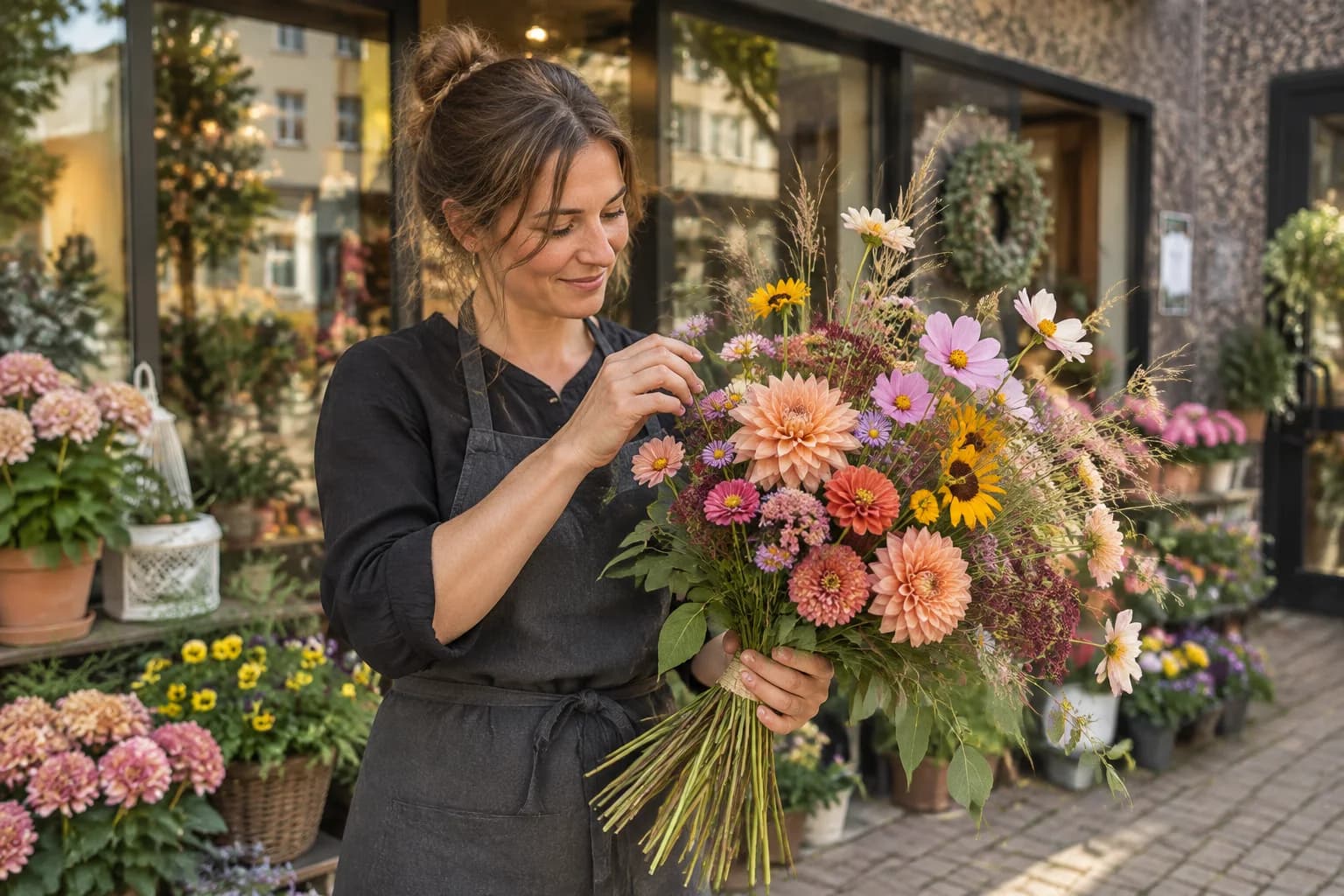
The four basic rules
If you take only one thing away from this article, make it these four points. They are the foundation. Without them, no home remedy and no miracle mixture in the world will work.
A slanted cut with a sharp knife
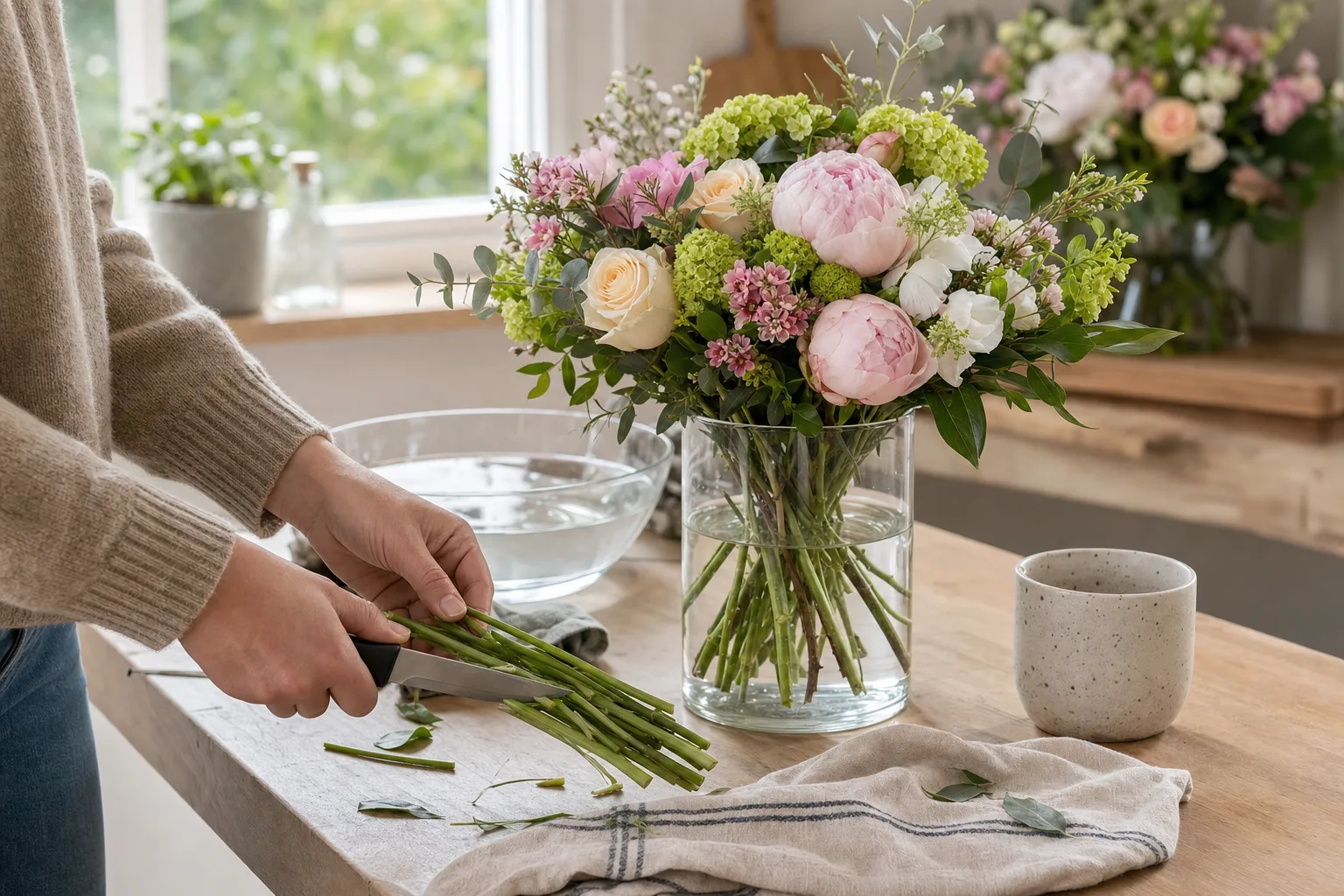
Straight after unpacking, cut about two centimetres off every stem at a slant. Slanted, because it makes the cut surface larger and the flower can take up more water. The sharpness of the knife matters. Blunt scissors crush the fine channels in the stem, so the plant can no longer draw up water and is exhausted within a day or two. If you don't have a florist's knife, simply use a sharp kitchen knife. Scissors will do at a pinch, but only very sharp ones.
Clean, lukewarm water
Lukewarm, never ice cold from the tap. Cut flowers are usually used to room temperature, and a shock of water at twelve degrees slows water uptake considerably. With tough varieties like roses, warm water works almost like a reset. The bloom opens faster and buds turn towards the sun instead of hanging limp. Before you fill the vase, take a moment to wash it out with a drop of washing-up liquid. Leftover bacteria from the last bouquet are the most common hidden reason a new bouquet gives up too soon.
Cool and out of direct sun
Lovely midday sun on the dining table and the fruit bowl next to it look romantic, but they are a death sentence for any bouquet. Direct sun around midday makes delicate varieties such as tulips, hydrangeas and peonies wilt within hours. Ripe apples and bananas give off a gas called ethylene, and for flowers ethylene is practically the signal to close up and age. Winter heating and draughts from a tilted window belong in the same category. The ideal spot is a bright place without direct sunshine, ideally somewhere that gets noticeably cooler at night.
Change the water completely every two days
Topping up is not enough. Bacteria multiply very quickly in standing water, and it is exactly these bacteria that block the channels in the stems. Fresh every two days therefore really means changing it completely, washing out the vase, rinsing the stems briefly under warm water and recutting them by half a centimetre. That sounds like work, but it takes under two minutes each time. Those two minutes are the biggest lever you have.
Do the old home remedies really work?
Aspirin in the water, a copper coin at the bottom of the vase, a splash of bleach to disinfect. If you have older relatives, you know the list by heart. And to be honest, some of these work, others not at all, and a few are even harmful. We'll go through them one by one.
Aspirin
In theory, acetylsalicylic acid lowers the pH of the water, which has a slightly preserving effect. In practice the measurable difference is minimal. On top of that, aspirin contains binding agents that can cloud the water further. If you want to try it, you can do so without doing much harm. But it won't become a favourite method.
Sugar plus a drop of washing-up liquid
This is the insider tip. Sugar feeds the blooms, and a drop of washing-up liquid lowers the surface tension of the water so the stems can draw it up better. The dose is about one teaspoon of sugar plus exactly one drop of washing-up liquid per litre of water. More is not better. This mixture beats almost every other home remedy and comes surprisingly close to professional flower food.
Bleach or chlorine cleaner
A very popular tip from the nineties, and risky in practice. A few drops of chlorine bleach in the water do reduce bacteria, but the dose is extremely tricky. Too much and you burn the stems, the smell in the living room becomes unpleasant, and the environmental balance is not great either. Better to leave it and use sugar plus washing-up liquid.
Copper coin
Copper is antibacterial, that is undisputed. However, modern cent coins are only thinly copper-plated, and the effect is measurably small. If you happen to have a proper pre-war copper coin you can drop it in, but everyone else can save the effort. A clean vase does far more.
Vodka or other strong spirits
This tip goes viral on social media and is still wrong. Alcohol actively interferes with water uptake because it attacks the plants' cell membranes. Instead of lasting longer, the bouquet gives up sooner. Leave it alone.
Care for specific varieties
Every variety has its own little quirk, and if you know it you can get a few extra days out of the bouquet. We'll go through the four varieties that most often appear in a Bouquet in spring and summer.
Tulips
Tulips are the only cut flower that keeps growing after being cut, often by several centimetres a day. That is not a defect but a trait of the variety. A little water at the start, about three to four centimetres, keeps them more compact. Keep the vase cool, as the stems naturally bend towards the light source. Vase life is typically between seven and ten days.
Roses
Roses like warm water and a really long cut of three to four centimetres. Strip off all leaves that would sit under water beforehand, otherwise they rot and smell after two days. If the flower head is already drooping, an hour in a lukewarm water bath with the stems fully submerged helps. Then recut the stems and put them back in the vase. With many varieties this revival works surprisingly well. Vase life is between seven and fourteen days.
Peonies
The diva among cut flowers. Peonies react strongly to warmth and direct light. Keeping them cool is not optional here but a must. If the buds arrive closed, you can gently encourage them with lukewarm water, but patience matters more than haste. A sticky coating on the bud is natural sap and can be carefully wiped off with a damp cloth, but note that this is optional and not strictly necessary. Vase life is five to ten days.
Hydrangeas
Hydrangeas are special because they take up water not only through the stem but also through the petals. When they go limp, submerge the whole flower head in lukewarm water for about twenty minutes. It sounds theatrical and works surprisingly often, because the plant practically soaks itself full. Then back into the vase as usual. Vase life is five to eight days.
When a bouquet has simply had its day
Even with the best care, there comes an end. When the flower heads turn brown, leaves hang limp and stems go soft, the end has been reached. Before you throw out the whole bouquet, a little trick is often worthwhile. Cut off the few blooms that are still fresh and put them in a small vase or a glass of water. That turns the fading bouquet into a second, smaller arrangement that often gives three to four more days of pleasure.
A good guide for natural vase life is between seven days for delicate varieties and fourteen days for robust ones. If you regularly fall well short of that, check the four basic rules above first and only then think about the quality of the flowers. In the vast majority of cases, a cool spot and clean water are the honest levers that make a difference. Which varieties are in season in which month, and therefore last especially long, is shown in our seasonal calendar for cut flowers.