The most important flowers in August
Dahlia
July until the first frost, lasts 5 to 8 days
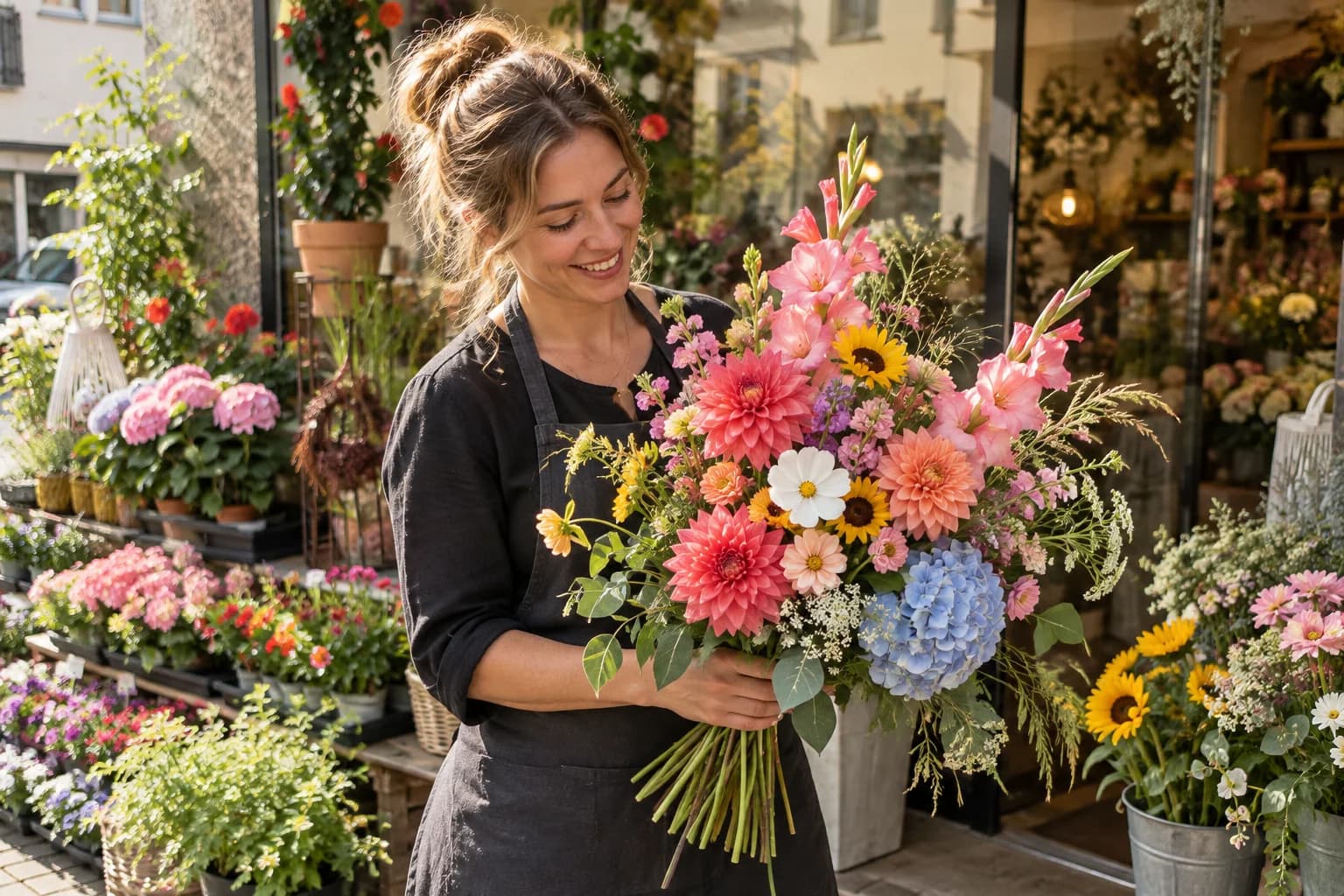
Dahlias are among the most important cut flowers of late summer. By August the plants are well established and offer a wide choice of shapes. There are small pompons, round ball dahlias, large decorative varieties and unusual cactus forms. Almost any colour is possible too.
Gladiolus
July to September, lasts 10 to 14 days
August is one of the most important months for gladioli. Their long flower spikes give a bouquet height and a clear direction. White and soft pink look elegant, while orange, red or bright pink draw much more attention.
Sunflower
Summer to autumn, lasts 7 to 10 days
Sunflowers belong to August like long evenings and warm days. As cut flowers, smaller varieties are often more versatile than the giant garden types. They combine well with dahlias, zinnias, grasses and cosmos, and don't always have to end up in a classic yellow summer bouquet.
Zinnia
Summer to early autumn, lasts 7 to 10 days
Zinnias are true late summer flowers. They love warmth and often peak in August and September. They are especially interesting as cut flowers because they bring strong colours, sturdy stems and many different flower shapes.
Cosmos
Summer to the first frost, lasts 4 to 6 days
Cosmos makes an August bouquet feel lighter. Its white, pink or bright pink flowers sit on thin stems and move at the slightest breeze. They go particularly well with compact dahlias and zinnias.
Hydrangea
Summer to early autumn, lasts 5 to 7 days
Hydrangeas add instant volume to a bouquet. In August many varieties are still in full colour, while later some blooms begin to turn to softer autumn tones. They work especially well with dahlias, lisianthus and loose greenery.
Phlox
Summer to late summer, lasts 4 to 6 days
Phlox carries many small flowers on one stem and often a noticeable fragrance. Pink, white and violet suit romantic or natural summer bouquets.
Helenium
Summer to autumn, lasts 7 to 10 days
Helenium is also known as sneezeweed. With yellow, orange and rusty tones, it already announces late summer. It works beautifully with dahlias, sunflowers and zinnias.
Crocosmia
Late summer, lasts 7 to 10 days
Crocosmia has slender, arching flower spikes with red or orange individual blooms. In a bouquet it gives height without feeling as dominant as gladioli.
First asters and sedum
from late August
Towards the end of August, many later varieties appear more strongly. Asters bring violet, pink and white to the mix, while sedum, with its firm flower heads, gives a much more autumnal structure. So the transition to September slowly begins in August.
What else you will find in August
Alongside the main varieties, you can often find roses, yarrow, rudbeckia, goldenrod, statice, lisianthus, various grasses and other summer flowers. August is therefore defined less by a single typical flower than by the sheer choice.
Three ideas for an August bouquet
Pure summer
bright, loose, colourful
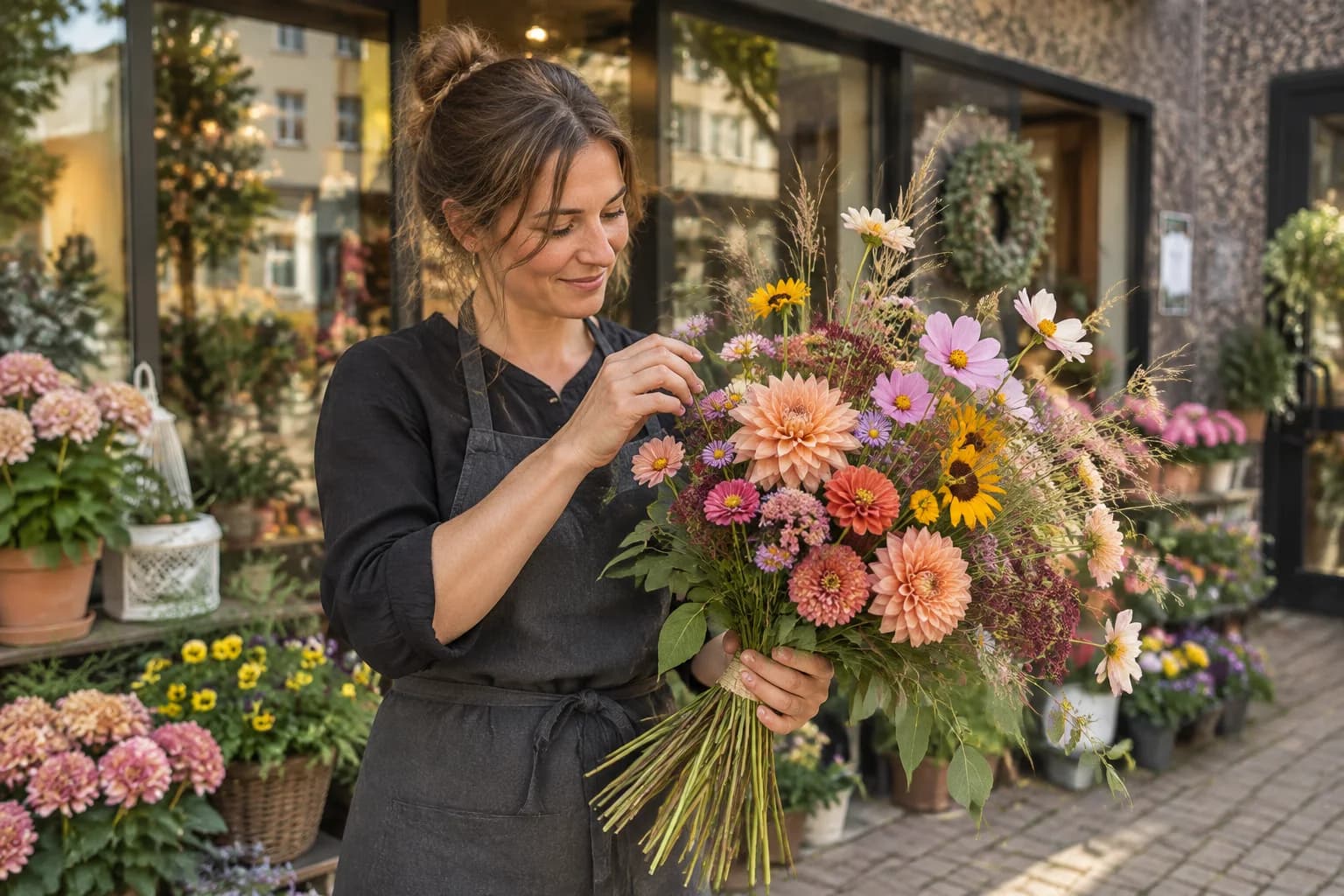
Sunflowers, zinnias, dahlias and cosmos.
Elegant
calm and clean, lots of height
White gladioli, hydrangeas, lisianthus and eucalyptus.
Late summer
warmer colour palette
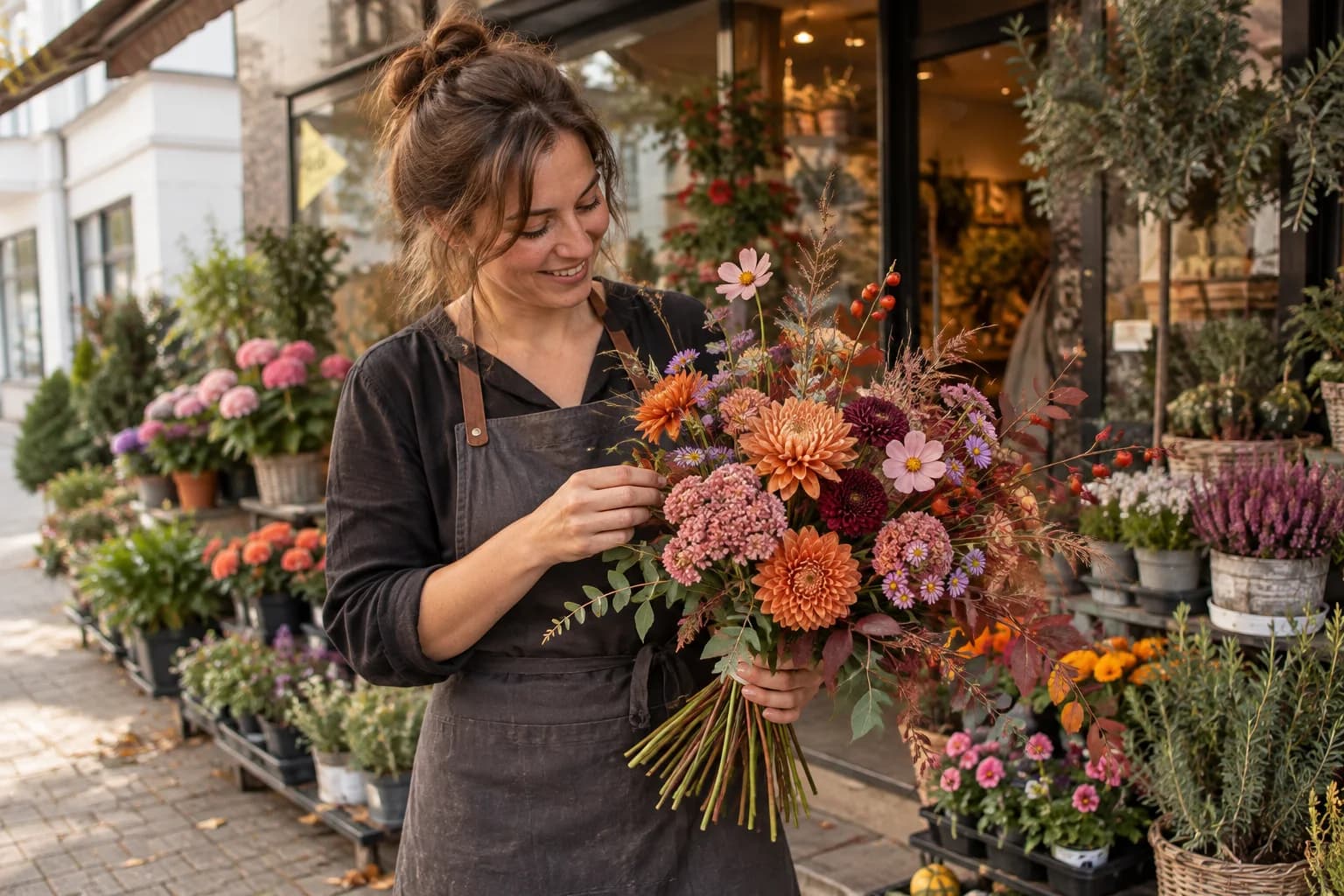
Dahlias, helenium, crocosmia, first asters and grasses, perfect for the second half of August.
The gladiolus is also the birth flower of the month, find out more in our article on the August birth flower. What blooms before and after is covered in What's in Bloom in July and What's in Bloom in September.
Why dahlias become so important in August
Dahlias are a good example of why a seasonal calendar changes from month to month. In July many varieties are only just starting, while in August and September they often look especially strong. The Royal Horticultural Society describes exactly these two months as the time when dahlias really come into their own. For seasonal floristry, this means that in August far more shapes, sizes and colours can be combined than at the start of summer.
What makes seasonal bouquets better
Longer lasting
Shorter transport routes mean less stress for the flower and more days in the vase.
Fresher
Seasonal flowers are often still standing in the field only shortly before they become a bouquet.
Often more climate friendly, but not automatically
Seasonal flowers can be a good choice, especially when they are grown locally and without energy-intensive greenhouse heating. But for the environmental footprint, distance is not the only factor. Growing method, energy use, cooling and transport all play a part.
Authentically seasonal
The bouquet reflects the time of year and brings variety to your living room.
August is late summer in flower form
In August, a lot is in bloom at the same time. The big summer flowers are still going strong and the first autumn varieties are already appearing. That is what makes the month so varied. You can order an August bouquet or start a flower subscription that chooses from the current season every week.