The most important flowers in September
Aster
August to October, lasts 7 to 10 days
Asters are among the most characteristic flowers of September and are also the birth flower of the month. Their small star-shaped blooms come mainly in purple, pink, white and blue-violet. In a bouquet they work both as a loose companion flower and in larger groups.
Dahlia
July until the first frost, lasts 5 to 8 days
If there is one month when dahlias really show everything they have, it's September. The plants are fully developed and, with regular cutting, keep producing new flowers. The choice of shapes and colours is huge. In September we particularly love ball dahlias and pompon dahlias together with asters, zinnias and grasses.
Zinnia
Summer to early autumn, lasts 7 to 10 days
Zinnias are especially strong once more in September. Their sturdy stems and clear colours make them very good cut flowers. From cream and apricot through pink to strong red and orange, there is almost every warm colour direction.
Sunflower
Summer to autumn, lasts 7 to 10 days
Sunflowers are still among the typical seasonal flowers in September too. Besides the familiar large yellow varieties, floristry also uses smaller blooms and darker colour variants. That means a sunflower bouquet doesn't have to look rustic.
Cosmos
Summer until the first frost, lasts 4 to 6 days
Cosmos often still flower very generously in September. Their thin stems and light blooms are the counterpoint to compact dahlias and sunflowers. In a bouquet they bring air and movement.
Sedum
Late summer and autumn, lasts 10 to 14 days
In September, sedum starts to get really interesting. Depending on the variety, the sturdy flower heads shift from green through pink to a deeper dusky pink. They last well and bring firm structure to late summer and autumn arrangements.
Japanese anemone
Late summer to autumn, lasts 4 to 7 days
White and pink Japanese anemones suit September perfectly. They look light and elegant and combine summery blooms with a calmer autumn look.
Helenium
Summer to autumn, lasts 7 to 10 days
Helenium, also called sneezeweed, brings warm tones to September. Yellow, orange and rusty red go especially well with dahlias and zinnias. The smaller blooms make a bouquet look more natural and less compact.
Hydrangea
Summer to early autumn, lasts 5 to 7 days
In September many hydrangeas change colour. Strong pink, blue or white turns in places into more muted green, dusky pink or wine red. These later hydrangeas in particular suit a September bouquet very well.
Crocosmia
Late summer, lasts 7 to 10 days
With their arching stems and orange-red single flowers, crocosmia bring a completely different shape to a bouquet. They add height and movement and work especially well together with dahlias and grasses.
What else you can find in September
Depending on region and weather, phlox, roses, yarrow, goldenrod, later gladioli, rudbeckia and various grasses may also still be available. At the same time, floristry is slowly changing. Berries, seed heads and structural greenery become more important and complement the blooms.
Three ideas for a September bouquet
Late summer
bold, loose, still summery
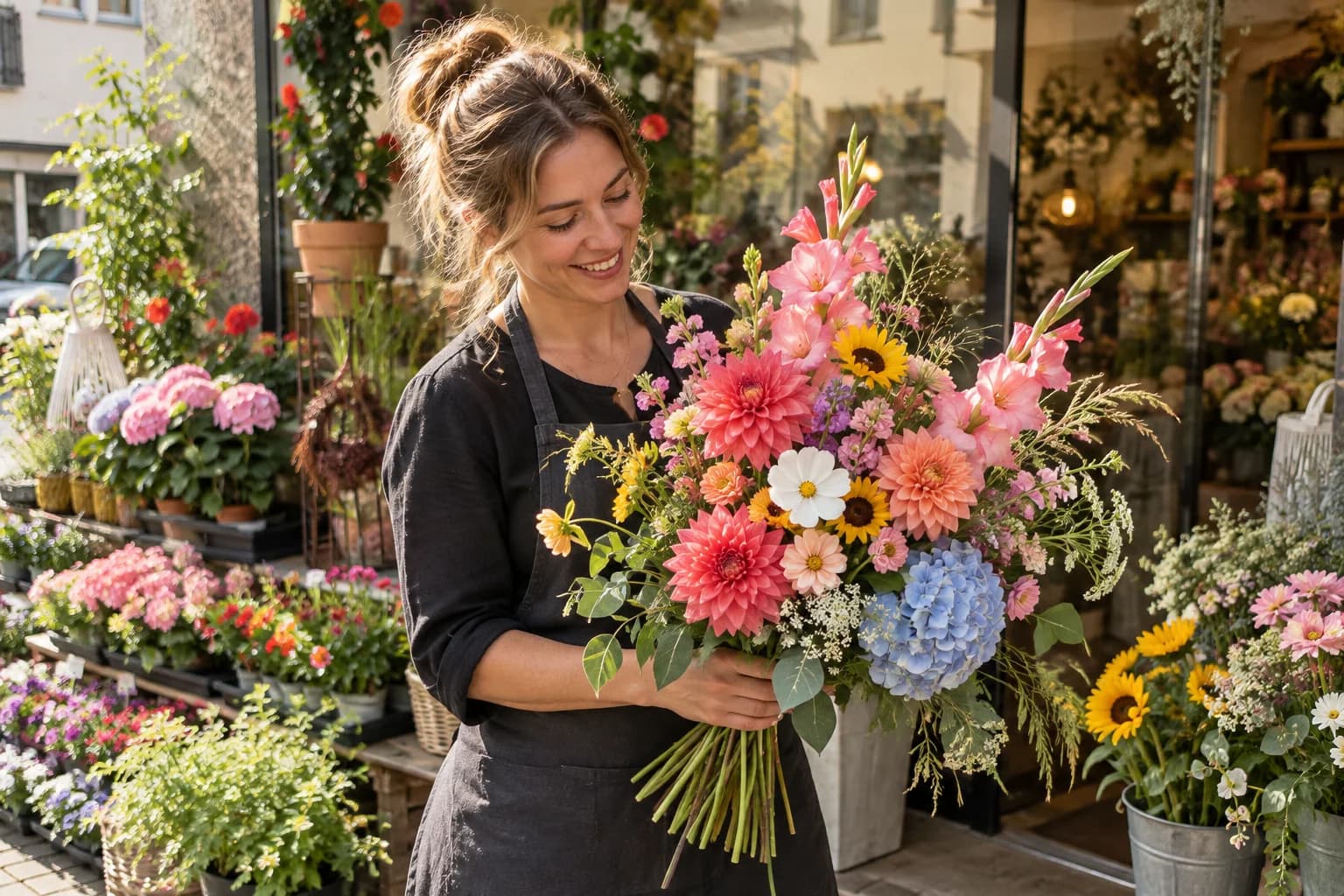
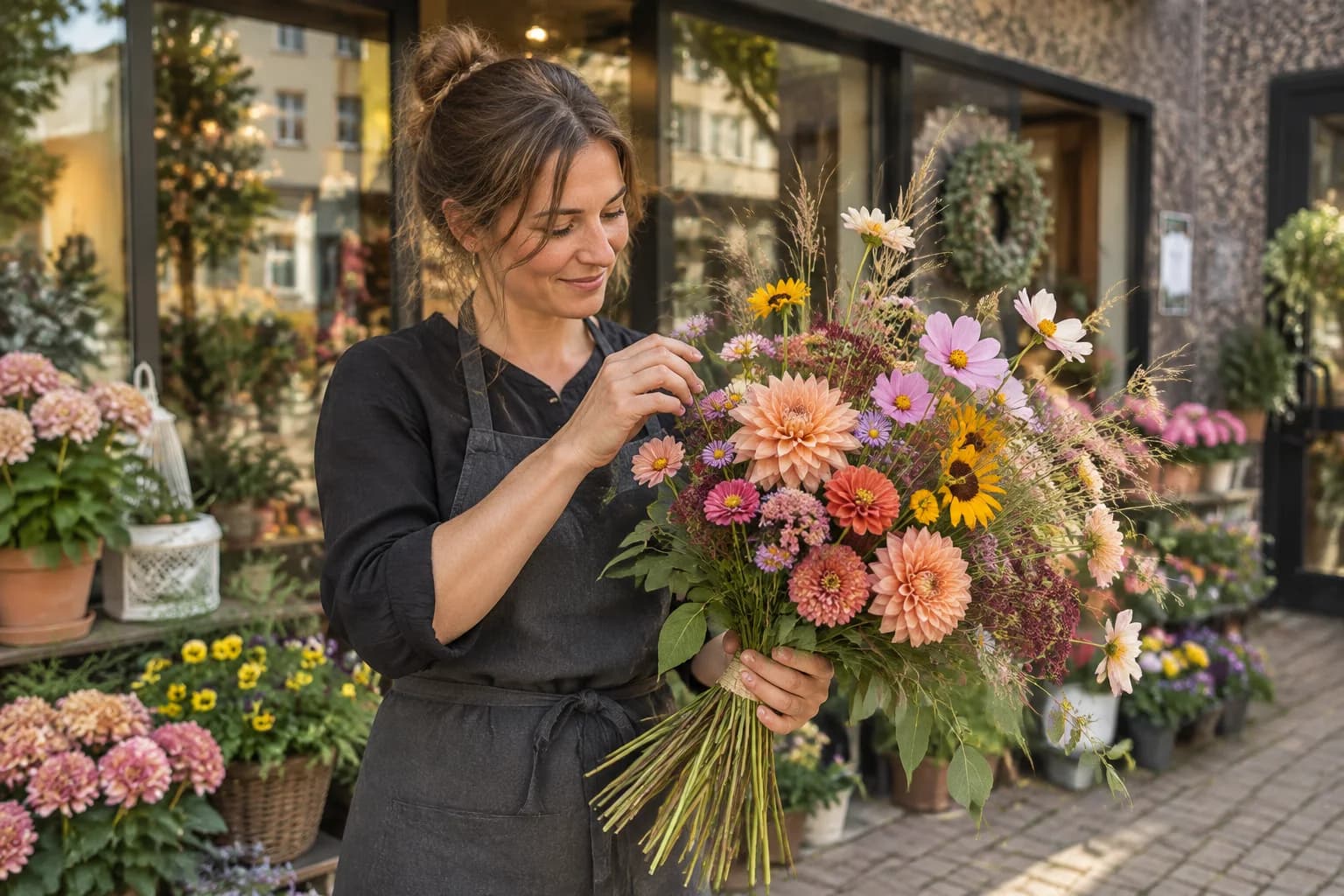
Dahlias, zinnias, cosmos and sunflowers.
Start of autumn
warm colours, more structure
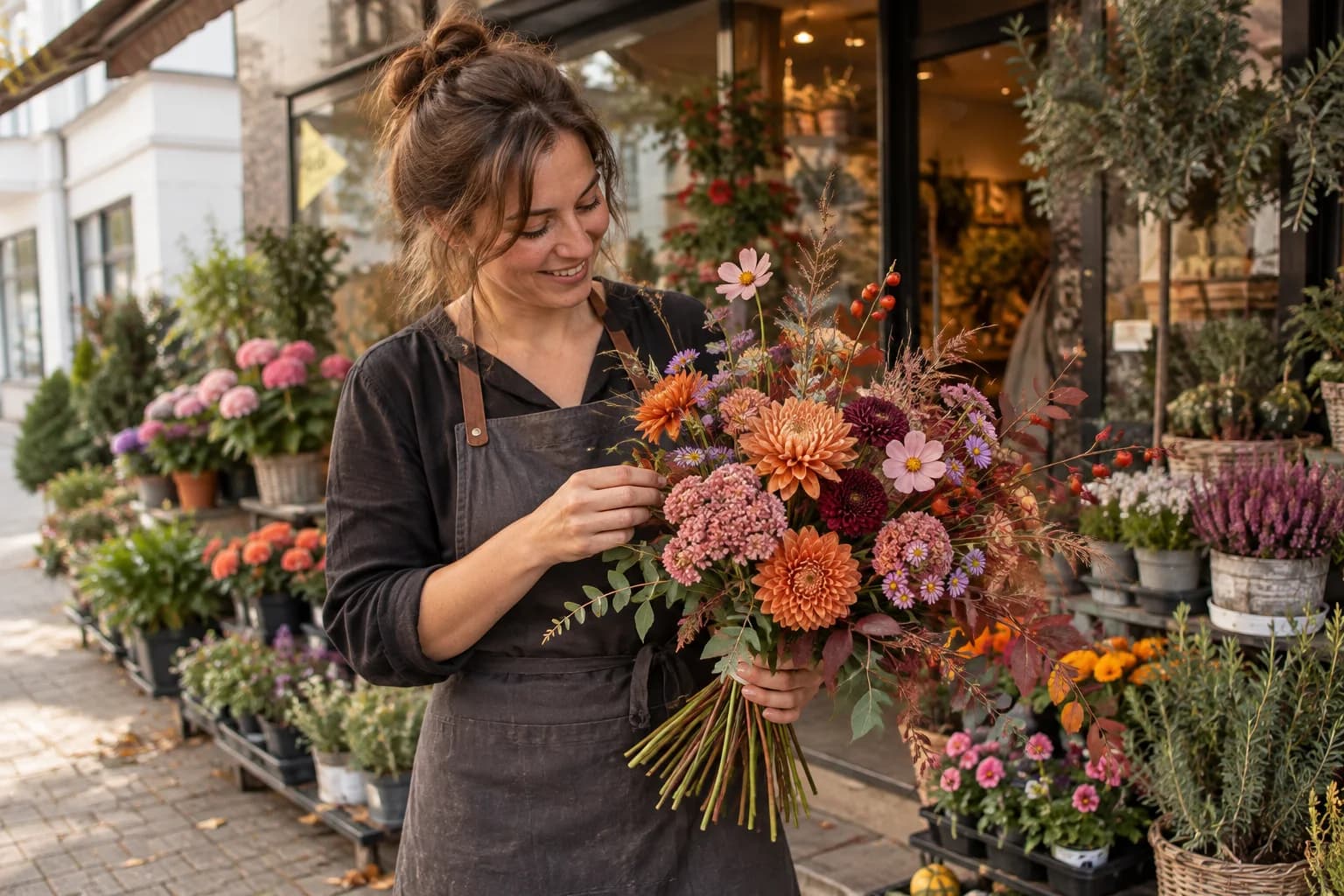
Asters, dahlias, sedum, helenium and grasses.
Calm and elegant
understated rather than autumn colours
Hydrangeas in muted tones, white asters, Japanese anemones and eucalyptus.
The aster is also the birth flower of the month, and you can read more in the article on the September birth flower. What blooms before and after is covered in What's in bloom in August and What's in bloom in October.
September is the transition month
In September there is no clear break between summer and autumn. That's exactly why two bouquets from the same week can look completely different. One still consists of sunflowers, dahlias and cosmos, the other already of asters, sedum and berry branches. For us, that is real seasonality.
What makes seasonal bouquets better
Longer lasting
Shorter journeys mean less stress for the flower and more days in the vase.
Fresher
Seasonal flowers are often still growing in the field shortly before they become your bouquet.
Often more climate-friendly, but not automatically
Seasonal flowers can be a good choice, especially when they are grown locally and without energy-intensive greenhouse heating. But for the environmental footprint, distance isn't the only thing that counts. Growing method, energy use, cooling and transport also play a part.
Authentically seasonal
The bouquet reflects the time of year and brings variety to your living room.
September has a bit of both seasons
Summer flowers are still here and the first true autumn flowers join them. This creates combinations that weren't possible in July and will be gone again by November. You can order a September bouquet or start a flower subscription that chooses from the current season every week.